
Why We Need to Talk About "Wabi-Sabi" Before We Open Japan's Door
This series · Korean and Japanese Changho · No. 1 (6 episodes total) Completed
"They look alike, but there's a reason for the difference."
- No. 1 Why We Need to Talk About "Wabi-Sabi" Before We Open Japan's Door
- No. 2 The Structural Reversal Behind Korean and Japanese Changho, and Climate
- No. 3 The Misunderstanding About Kumiko (組子)
- No. 4 The Lattice's Relaxed Proportion vs. the Strict Division of Line and Plane
- No. 5 Two Ways of Handling Space: Korea and Japan
- No. 6 Korean Changho and Japanese Shoji | Why Are They Different?
Originally written in Korean by the author. Translated with the help of AI. Read the original
You are free to quote and excerpt posts and records from the Pyeongmok blog, as long as you credit the source (pyeongmok.com).
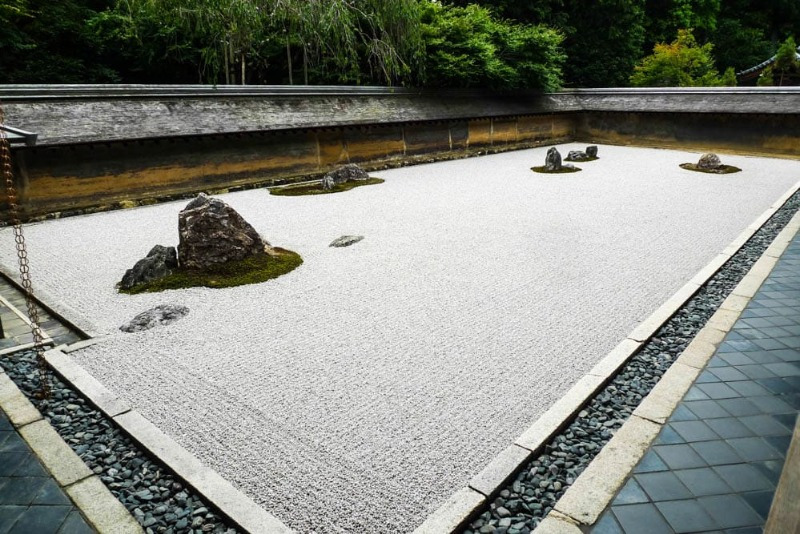
If you know wabi-sabi only as an interior design style, you won't be able to read Japan's doors. Before it's an aesthetic, wabi-sabi is an existential attitude that governs the whole of life, and Japan's changho stand on top of that attitude. So before we talk about doors, let's cover this first.
The formation of wabi-sabi is deeply steeped in the influence of impermanence (諸行無常) and Zen Buddhism — the proposition that everything in the world changes, decays, and eventually disappears. Faced with this decay and death, humans usually feel fear and crave an eternal, indestructible fortress, but Japanese culture chose the opposite path. It declared: "If everything disappears eventually anyway, let's accept that very lack, that very process of disappearing, as the essence of life itself." Broken down into more intuitive terms, this looks like the following.
First, wabi (侘) is a voluntary, inward "solitude" and "lack."
It's the mental state you face once you've stripped away all splendor and are left alone — solitude, withdrawing from the world's noise and settling into loneliness by choice; lack, calmly accepting an unfilled emptiness; and restraint, paring away artificial desire. Stripping away all ornate decoration and leaving nothing in the room but a single sheet of thin paper door and a rough wall is a philosophical practice that tries to raise the mind's inner density by reducing outside stimulation.
Second, sabi (寂) is an outward "agedness" and a "natural" kind of decay.
It's the trace the passage of time leaves on an object — agedness, as it gathers the patina and fades with the years; stillness, the quiet settled within a soundless calm; and nature, as an inevitable course no human power can reverse. An object's aging, gathering patina and fading with the passage of time, is an unavoidable trace of decay, and paradoxically, it is proof that the object is yielding to time.
This spirit is woven deeply into Japanese houses and spaces. Amid the fear of earthquakes that could collapse a building at any moment, and a hot, humid environment, rather than building an eternal fortress, they built "a thin, fragile shelter that would be no surprise to lose at any time."
This attitude, crossing over the ages, became one of the important philosophical sources of modern minimalism. Modern minimalism is often understood merely as a visual tidiness or a refined design style, but underneath it lies a deep existential reflection: "strip away excess material things and recover the essence of life." It was precisely wabi-sabi, from the East, that modern Westerners arrived at when they felt a poverty of the soul amid material abundance.
Minimalism's principle of excluding decoration and excess touches the voluntary lack of wabi (侘), which tried to awaken the spirit within the solitude of empty space; and contemporary architecture that leaves raw concrete or rough texture exposed as-is is the attitude of sabi (寂) — which celebrated the agedness of time and an artifice-free naturalness — reinterpreted in a modern language.
In the end, modern minimalism isn't simply a technique of "emptying out." It's the worldview Japanese people, hundreds of years ago, once gazed at across a single sheet of thin paper door — the insight that "only in the empty spot, where there's nothing left to strip away, does the essence of a thing finally reveal itself" — carried forward into modern design and space. The person inside the room, with a single sheet of thin paper door between them and the world, came to face the essence of life amid solitude and fading age.
The next installment looks at how this worldview actually takes shape on top of the shoji's real structure and climate conditions.
Browse the pattern designs in Pyeongmok Studio
Go to the Collection