The Work of Pyeongmok
This series · Back at the Bench · No. 1 (6 episodes total) Ongoing
"Writing down the thoughts that come while I build."
Originally written in Korean by the author. Translated with the help of AI. Read the original
You are free to quote and excerpt posts and records from the Pyeongmok blog, as long as you credit the source (pyeongmok.com).
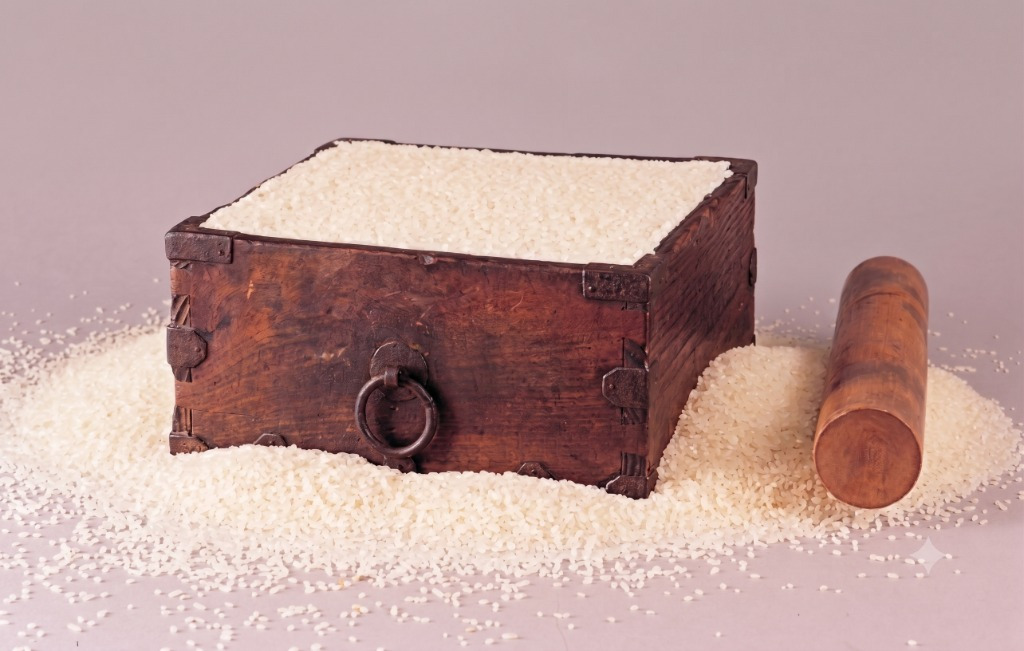
This is a story from back when every neighborhood had its own rice shop. Measuring out rice always came with one particular tool.
When you poured rice into a measuring box, it piled up in a heap on top — and you'd take a wooden stick and push it straight across, leveling the heap down to the height of the rim.
That stick is called a pyeongmire. In Hanja, it's written 平木 (pyeong-mok) — "wood that pushes something flat."
It's one of the simplest tools in the world; looking at it, it's really just a plain stick.
There's a separate Hanja character just for this tool:
槪 (gae) — meaning "a tool for leveling a measure of grain," and it carries the tree radical (木) precisely because this stick is made of wood.
And this is the same character 概/槪 (gae) that appears in gaenyeom (槪念, "concept"). It's the same gae in garon (槪論, "an overview"), daegae (大槪, "generally, roughly"), and gigae (氣槪, "spirit, mettle").
Which means a "concept" is, at root, a thought that's been leveled flat by a pyeongmire. So a concept, in the end, is really a standard.
When someone says another person "has no gaenyeom" (concept/sense), what they're really saying is that person has no standard.
Just as a measuring box needs a rim for the measuring to work, a thought needs a line too — one that can tell excess apart from insufficiency.
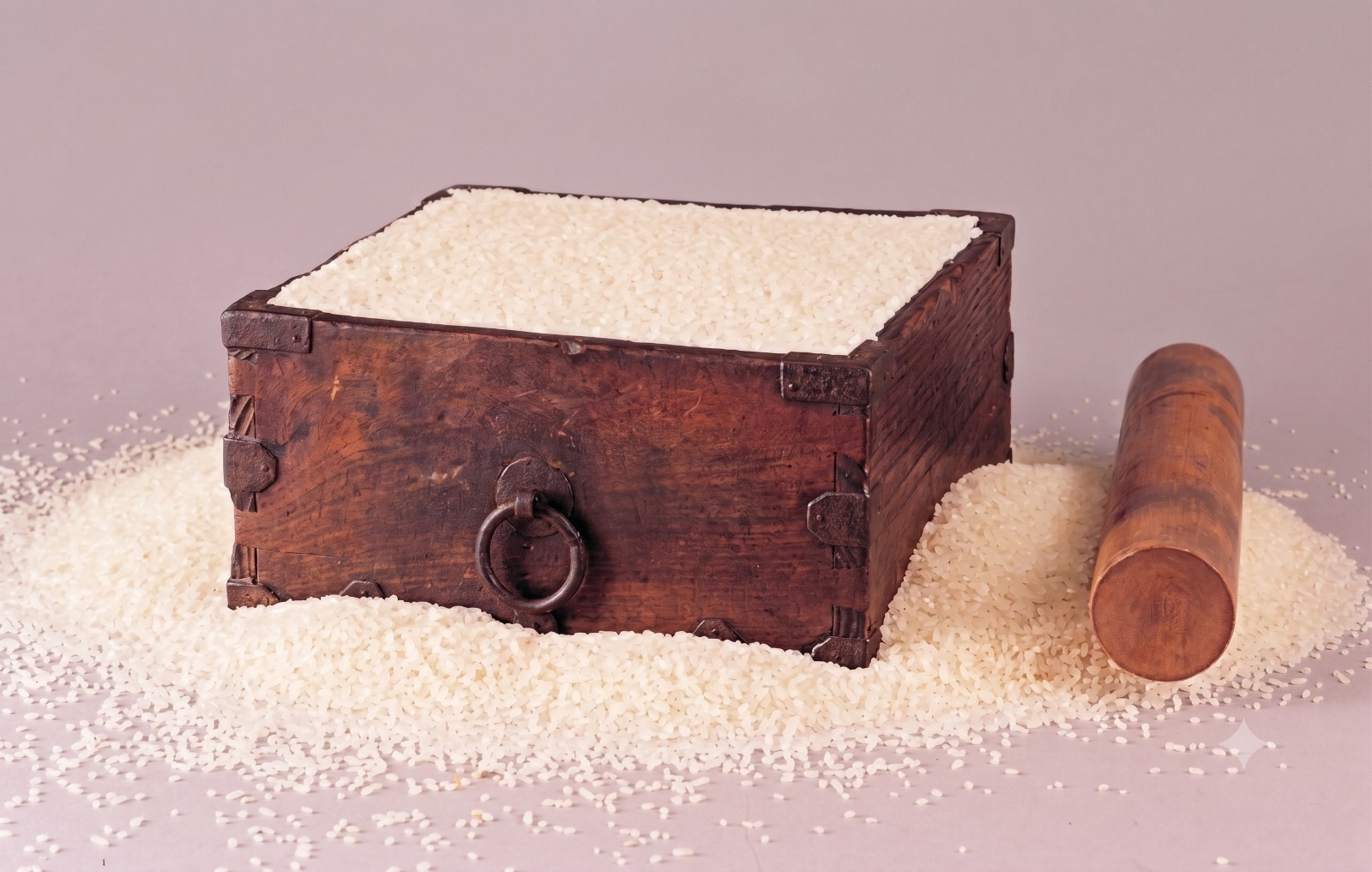
But if you picture the hand actually doing the measuring, the pyeongmire isn't a cutting tool. It's a pushing tool.
As the stick passes over the top of the measuring box, the grains in the heaped spot don't just fall straight to the ground — they roll along in front of the stick and get swept into the hollow spots first. The empty spots get filled in, and only what's left over gets pushed out.
Removing and filling happen within a single motion, but within that motion, filling comes first.
A pyeongmire never discards anything until every deficient spot has been filled.
What a pyeongmire creates isn't a deficient flat surface — it's a flat surface where the excess has filled in the deficiency.
Which is why one doe of rice, measured this way, isn't a stingy doe — it's an honest doe.
This balance is why the workshop was named Pyeongmok.
A balance with neither excess nor deficiency. A tool that fills what's lacking and removes what's excessive.
That's exactly the work a carpenter does.
Joinery follows exactly this same structure. Cutting a tenon means removing material from one piece,
and carving a mortise is also an act of removal.
But the instant the two pieces meet, the spot removed from one side is filled by the other piece coming in.
Each filling the other's lack with its own body — that's what gyeolgu, traditional joinery, really is.
It's not patching a deficiency from the outside with a nail or glue — it's letting the pieces themselves exchange excess and deficiency between them.
That's why each individual slat can be thin and fragile, and yet once joined into a door, it holds up for a hundred years.
Balance isn't about shaving both sides down equally.
It's about cutting a path so that the strength in the excessive spot can flow toward the deficient one.
A pyeongmire does that work on top of a measuring box; a carpenter does it inside the wood.
Here's how the workshop's own introduction puts it.
When measuring grain by the doe or the mal, the tool used to push the heaped-up top flat and level is called a pyeongmire.
In Hanja, this is written as pyeongmok (平木).
Pyeongmok
must not overflow,
and must not fall short.
It fills what's lacking and removes what's excessive,
holding everything in balance.
What a carpenter does is no different.
The carpenters of Pyeongmok want to make changho, doors, and furniture
that don't wear down with time, but gain character within it.
Still building, today too.
Browse the pattern designs in Pyeongmok Studio
Go to the Collection