Traditional Changho | Why Is This Term So Blurry?
This series · A Second Look · No. 3 (8 episodes total) Ongoing
"The more firmly something has set, the more it deserves a second look."
- No. 1 Sotgeul-chang or Soseul-chang | The Correct Spelling and Its Origin
- No. 2 The Dokkaebi Has No Horns
- No. 3 Traditional Changho | Why Is This Term So Blurry?
- No. 4 Traditional Changho | Must It Be Built Exactly as the Ancestors Built It?
- No. 5 Traditional Changho | My Hand Plane Is a Japanese Plane
- No. 6 Manja-sal and Man-sal Are Different Changho
- No. 7 Mili Isn't a Water Channel
- No. 8 Jang Gi-in's Changho | Where It Comes Apart
Originally written in Korean by the author. Translated with the help of AI. Read the original
You are free to quote and excerpt posts and records from the Pyeongmok blog, as long as you credit the source (pyeongmok.com).
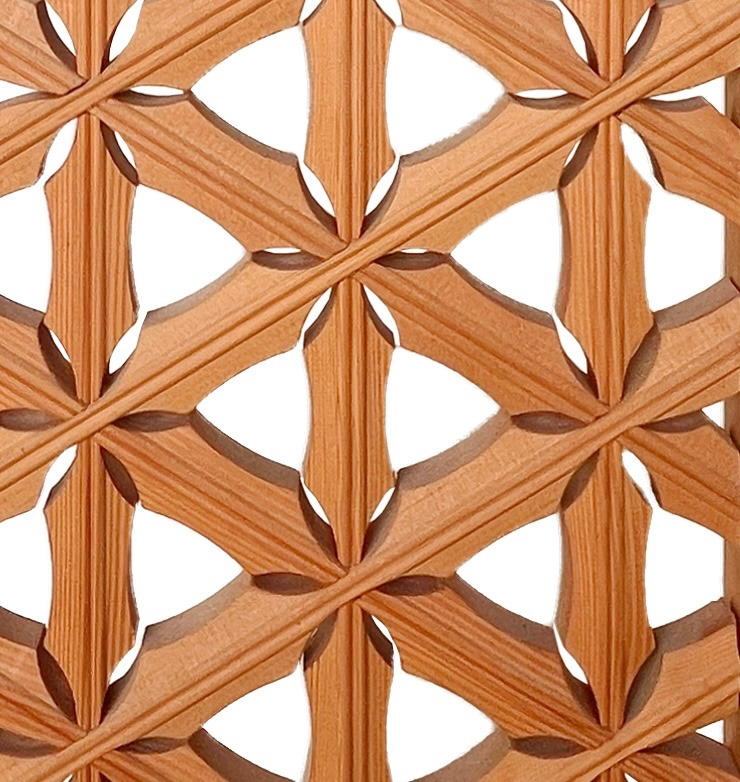
I build changho.
And yet I've never once built a "traditional changho."
Sounds like an odd thing to say, but it's true. On my workbench, no changho ever carries the name "traditional changho." What I'm joining today is tti-sal; what I'll join next week is jeongja-sal.
It's the same when I take an order. "Give me a tti-sal," "make it kkot-sal." No one in the workshop ever says "give me a traditional changho."
This phrase is only heard once you step outside the workshop door — on a signboard, in an ad, in a search bar.
But gather up everything that phrase points to, out there beyond the door, and it becomes clear: I'm not the odd one here. The phrase is.
Aluminum sashes molded to mimic the shape of an old changho are sold as "traditional changho." A changho simply made of wood is sold as a "traditional changho."
A changho whose lattice was joined slat by slat is also sold as a "traditional changho."
Objects with different materials, different methods, prices ten times apart, all standing there wearing the exact same name tag.
When a single name points at this many different objects, that name, in effect, points at nothing at all.
Why is it this blurry? I only understood once I traced the word's genealogy. Of course it's blurry.
Because this word was never, from birth, a maker's word. The Sino-Korean term jeontong (傳統) itself is old. But its meaning used to be different. "Jeon" (傳, to pass down) plus "tong" (統, lineage) — it meant passing down the legitimate succession of a throne or a clan. For a person of Joseon, where the subject was the dynasty, jeontong was a word attached to a king's lineage, not to a changho or a dinner table.
When ordering a changho, people called each changho by its own name.
The meaning we use now — customs and culture handed down from long ago, in general — is a modern translation.
When modern Japan translated the Western word "tradition," it pulled out this old Hanja term and dressed it in a new meaning.
As if society, culture, and the individual had been built that way all along. At this point, the subject shifted from the dynasty to the nation.
That word entered Korean in the early 20th century, grew heated as it passed through the colonial period, and in 1962, alongside the Cultural Properties Protection Act, it became a word of administration.
An age arrived in which the state designated what counted as tradition. And the market took up the category the system had created.
Traditional teahouse, traditional wedding, traditional confectionery — the two syllables "traditional" began attaching themselves to nouns like a quality stamp, and somewhere at the end of that procession sits "traditional changho."
There are historians who have shown that a great many things we call "tradition" were, in fact, invented in the modern era —
this is the story told in The Invention of Tradition, edited by Eric Hobsbawm.
The Scottish tartan kilt, which we assume to be ancient, turns out to be an invention from just a hundred-odd years ago — that sort of thing.
I'd like to add one thing to that. It isn't only traditions that were invented. The very word "tradition" was invented.
To sum up: this word was born as a word of the dynasty, became a translated term, then a word of the nation, then a word of administration, then a word of marketing.
Across five changes of ownership, not once was it a maker's word.
A Joseon carpenter never called a changho by this word, and I, a carpenter today, don't call it that either.
Of course a name imposed from outside comes out of focus.
So should we just discard it?
This word is too widely used for that. Even I have no way of dodging it in front of a customer.
If it can't be discarded, the only option is to scrutinize it and sharpen it. And that means one unavoidable question.
We have to start by scrutinizing the answer people already have for this blurry word — the answer that looks most plausible.
Is a "traditional changho" a changho built exactly as an ancestral carpenter built it?
The next piece answers that question. To give you a preview — I have never built the same changho twice.
Source: Eric Hobsbawm (ed.), The Invention of Tradition
See yukmo-sotgeul-sal
Go to the Collection