Gwigap-sal | Tenon or Notch?
This series · The Changho Glossary · No. 10 (14 episodes total) Ongoing
"Sorting out the names and joinery of traditional changho, one at a time."
- No. 1 Jeongja-sal | A Changho Joined into the Character 井
- No. 2 Se-sal (細살) | A Changho Set with Fine Slats, Packed Close
- No. 3 Bit-sal | A Changho Joined with Slats Set on the Diagonal
- No. 4 Aja-sal | A Pattern With No Good Meaning
- No. 5 Wanja-sal | A Pattern Overflowing with Meaning
- No. 6 Sutdae-sal | A Changho Joined with Broken Slats
- No. 7 Semo-sotgeul-sal | A Changho Where the Cells Come Out as Triangles
- No. 8 Yukmo-sotgeul-sal | A Changho Where the Cells Come Out as Hexagons
- No. 9 Gyeokja-bit-sal | A Changho Layering Diagonal Lattice Over a Grid
- No. 10 Gwigap-sal | Tenon or Notch?
- No. 11 Yongja-sal | A Jeongja-sal Scaled Up
- No. 12 Changho Hung in Layers | Ssangchang, Yeongchang, Heukchang, Gapchang
- No. 13 Changho Built into the Wall | Bongchang, Salchang, Gwangchang, Deulchang
- No. 14 Small Changho | Baraji, Nukkup, Changgyeong
Originally written in Korean by the author. Translated with the help of AI. Read the original
You are free to quote and excerpt posts and records from the Pyeongmok blog, as long as you credit the source (pyeongmok.com).
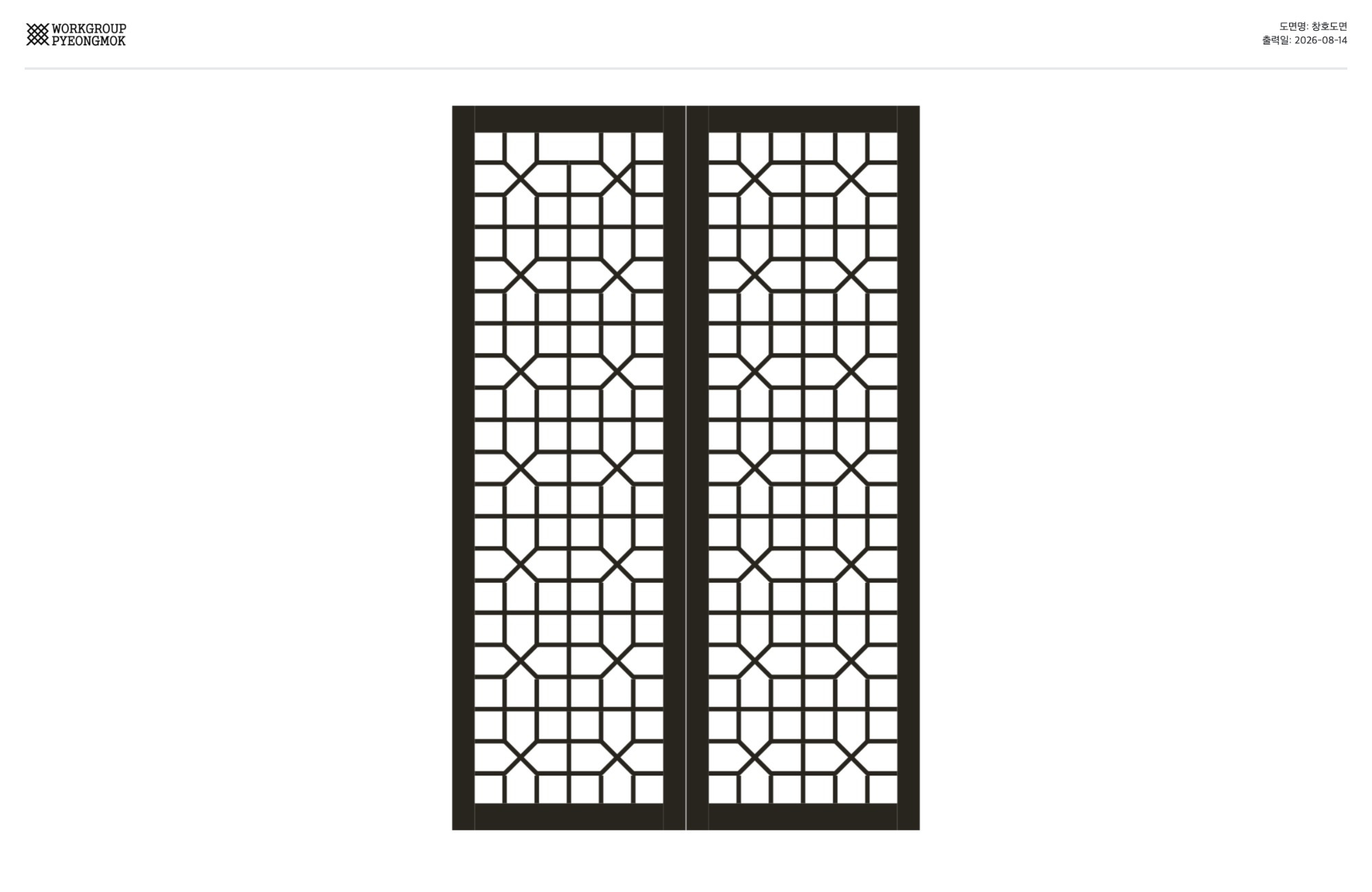
Gwigap-sal — a changho joined into the pattern of a tortoise shell. Regular hexagons link together like a honeycomb. The tortoise is one of the Ten Longevity Symbols. Being a creature that genuinely lives a long time, a tortoise-like lifespan even had its own name, gwiryeong. Carving a tortoise into a changho meant a wish for long life. It's used in inner rooms — not a changho seen from outside, but one seen from inside the room. Ju Nam-cheol divides changho into outer and inner categories, listing the tti-sal, jeongja-sal, and bit-sal family as the outer layer, and yongja-sal, aja-sal, gwija-sal, gwigap-sal, and sutdae-sal as the inner layer behind them. It's also set into the center of a bulbalgi, at the spot where a daecheong hall opens into a room.
Join gwigap-sal, and you run into a spot where three slats meet at a single point. That's simply what happens when hexagons link together. What do you call that spot? This is exactly where the terminology splits.
The Changho-and-Doors Vocabulary Has No "Chok" (Tenon)
Look at the Korea Traditional Knowledge Portal's entry on beomsal-changho, and it lists slat joints under three names: half-lap, long tenon joint, short tenon joint. The word "chok" (촉, tenon/pin) doesn't appear. Jang Gi-in is the same way: half-lap, triple-notch, quarter-notch, tenon. It's hard to find the word "chok" anywhere in writing about changho.
The Fine-Furniture Vocabulary Is Full of "Chok"
Cross over into furniture-making, and the picture is different. Yeongwi-chok, jebi-chok, sumeun-jangbu-chok, mak-jangbu-chok, teok-jangbu-chok, jumeok-jangbu-chok. Word after word compounds with "chok."
"Yeongwi" means "swallow's mouth." It refers to the spot where two pieces are joined by cutting their corners at an angle so the seam doesn't show — a shape said to resemble a swallow's beak, which is why fine-furniture joiners also call yeongwi-chok "jebi-chok" (swallow chok). "Sumeun" means "hidden" — that the joint face doesn't show on the surface. That's how a long compound name like sumeun-yeongwi-chok-jjaim comes about.
"Teok" Isn't the Opposite of "Chok"
This is the important part. There's a term teok-jangbu-chok. There's also jumeok-jangbu-chok. "Teok" and "jumeok" are simply modifiers describing the shape of the chok. Which means what gets called "teok" and what gets called "chok" may not be pointing at two different joineries at all. It could just be a difference between calling the same thing by its first word versus its last word.
Except It Doesn't Quite Line Up
The definition of "yeongwi" is 45°. But in a hexagon, the slats meet at 120°. Split in half, that's still 60°. Apply the 45° definition literally, and it doesn't match. Whether "yeongwi" is used broadly for any angled corner joint regardless of angle, or reserved strictly for 45°, isn't settled.
Why the Vocabulary Splits
A daemokjang (master carpenter) builds houses. A somokjang (fine-furniture joiner) builds changho. Furniture comes from the same hands. Even the national heritage records state that a somokjang builds a building's changho together with its wooden furniture.
Which means the two vocabularies meet inside a single person. Words used for furniture cross over into changho, and words used for changho cross over into furniture. The literature records them separately, but the hand is one and the same. I believe this is exactly where the vocabulary splits.
No Answer Settled Yet
Which term is correct needs more looking into. But what's causing the split is settled. Changho-and-doors literature and fine-furniture literature use different words; "teok" and "chok" aren't opposites; and "yeongwi"'s angle doesn't match a hexagon. I'll leave it here, at just this much.
Source
- Hong Gi-ok, "A Study of Vocabulary Related to Korean Woodworking"
- Korea Traditional Knowledge Portal, "Beomsal-changho"
- Ju Nam-cheol, "The Face of a House: Changho," Munhwajae Sarang, 2015
Try designing this lattice yourself
Try adjusting the Gwigap-sal (Tortoise-shell Lattice) pattern covered in this post yourself, right in the studio.
Open in studioThis lattice belongs to the Gwigap-sal (Tortoise-shell Lattice) series — see real production examples in the Collection.
View Gwigap-sal (Tortoise-shell Lattice) in the Collection