Semo-sotgeul-sal | A Changho Where the Cells Come Out as Triangles
This series · The Changho Glossary · No. 7 (14 episodes total) Ongoing
"Sorting out the names and joinery of traditional changho, one at a time."
- No. 1 Jeongja-sal | A Changho Joined into the Character 井
- No. 2 Se-sal (細살) | A Changho Set with Fine Slats, Packed Close
- No. 3 Bit-sal | A Changho Joined with Slats Set on the Diagonal
- No. 4 Aja-sal | A Pattern With No Good Meaning
- No. 5 Wanja-sal | A Pattern Overflowing with Meaning
- No. 6 Sutdae-sal | A Changho Joined with Broken Slats
- No. 7 Semo-sotgeul-sal | A Changho Where the Cells Come Out as Triangles
- No. 8 Yukmo-sotgeul-sal | A Changho Where the Cells Come Out as Hexagons
- No. 9 Gyeokja-bit-sal | A Changho Layering Diagonal Lattice Over a Grid
- No. 10 Gwigap-sal | Tenon or Notch?
- No. 11 Yongja-sal | A Jeongja-sal Scaled Up
- No. 12 Changho Hung in Layers | Ssangchang, Yeongchang, Heukchang, Gapchang
- No. 13 Changho Built into the Wall | Bongchang, Salchang, Gwangchang, Deulchang
- No. 14 Small Changho | Baraji, Nukkup, Changgyeong
Originally written in Korean by the author. Translated with the help of AI. Read the original
You are free to quote and excerpt posts and records from the Pyeongmok blog, as long as you credit the source (pyeongmok.com).
Definition
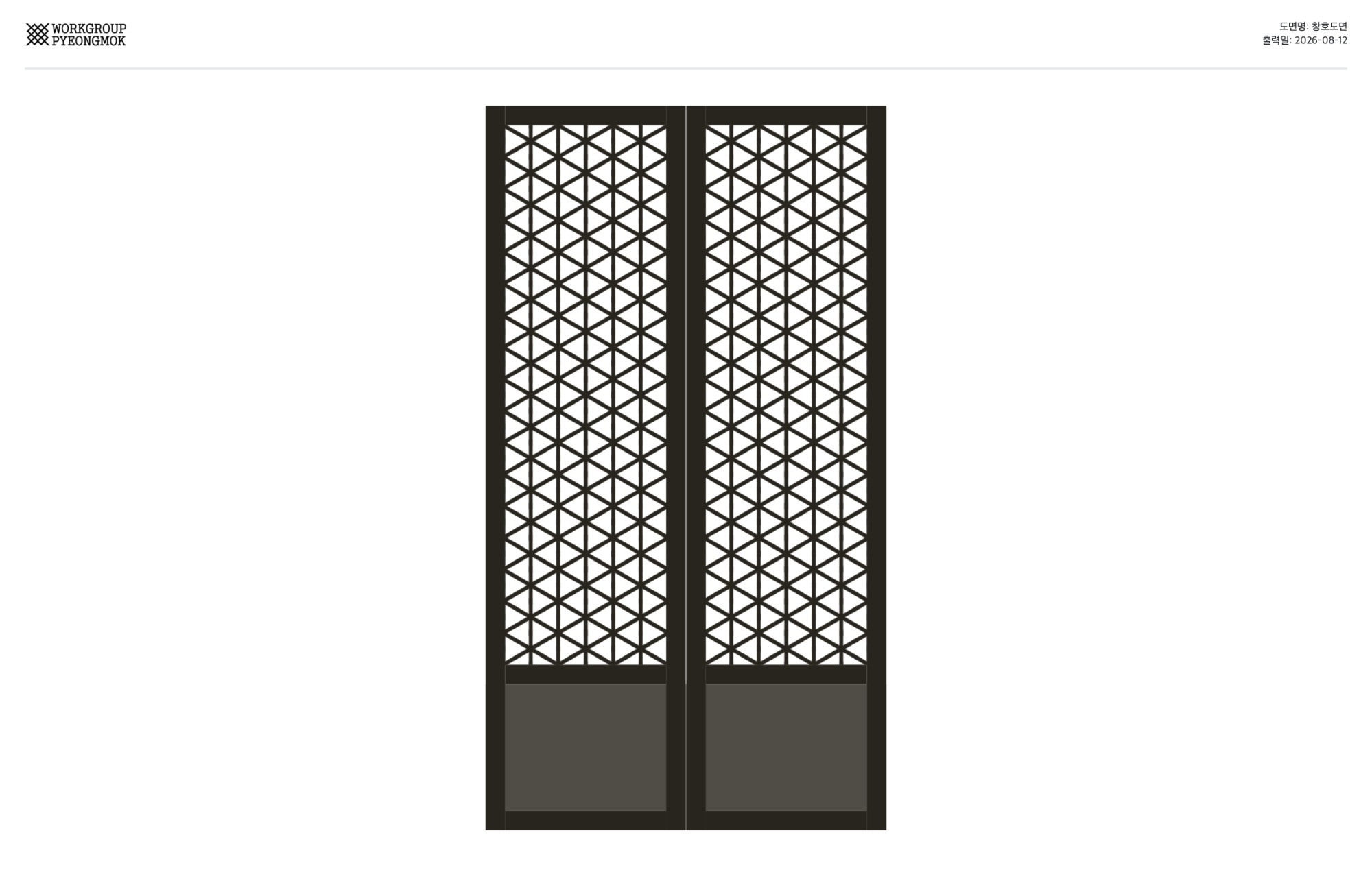
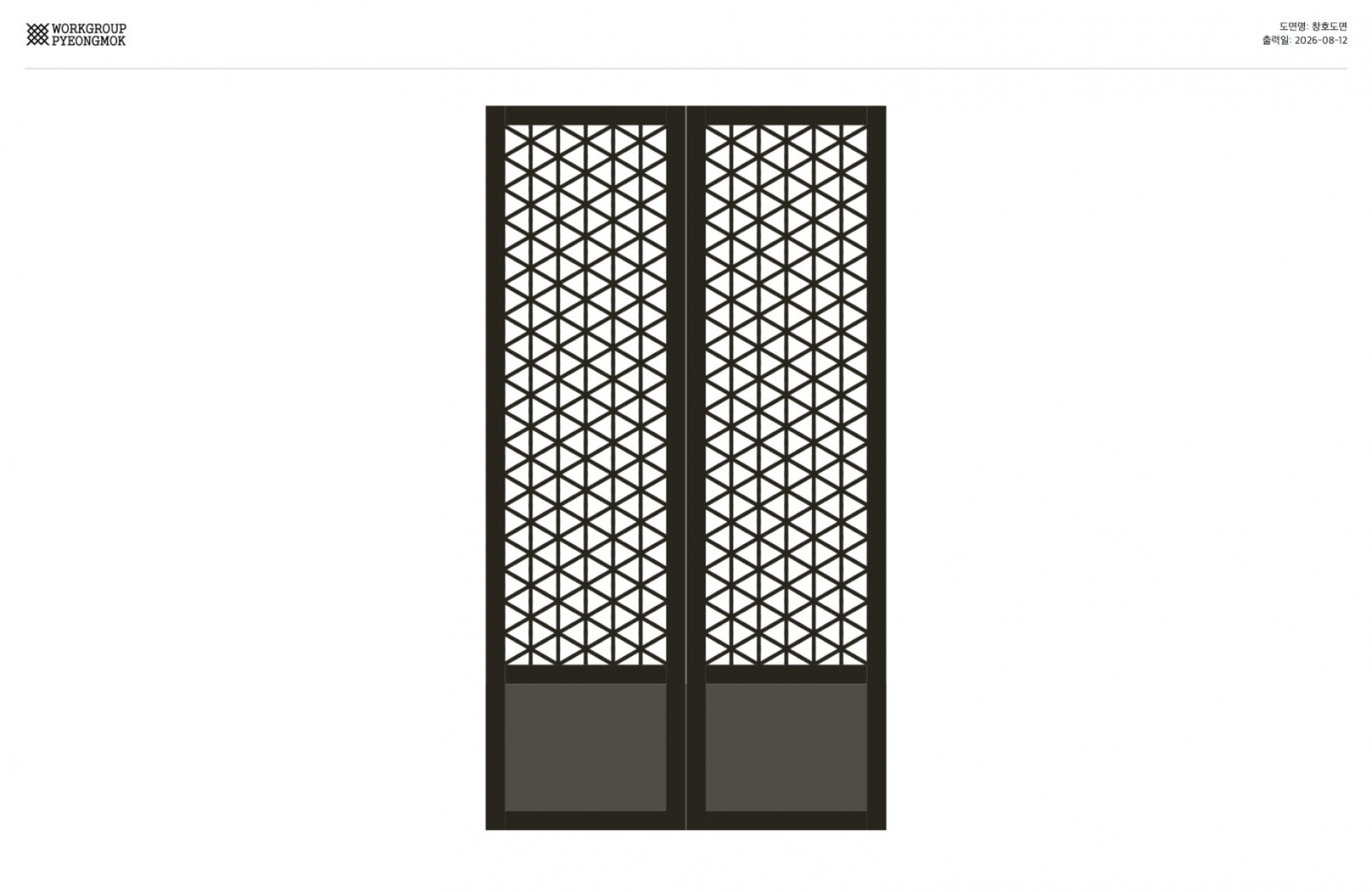
Semo-sotgeul-sal is a changho where slats are laid diagonally at 30° and crossed, with a vertical slat set at each crossing point so that the cells come out as equilateral triangles.
The name says exactly what it is. Because the cells come out as triangles (semo), it's called semo-sotgeul-sal. That's what it's called on the job.
The Vertical Slat's Position Splits Semo from Yukmo
First, slats are laid at 30° and crossed in from both sides. Stop right there, and each section is a diamond. This is 30° sotgeul-sal.
Then a vertical slat is added. But where you place it splits the pattern in two.
Set the vertical slat right on the crossing point, and the diamond splits in half into an equilateral triangle. That's semo-sotgeul-sal.
Set the vertical slat between two crossing points instead, and you get a regular hexagon. That's yukmo-sotgeul-sal.
The slat angle is the same. The slat count is the same. One single choice — where the vertical slat goes — is what makes it triangles or hexagons.
So these two changho aren't something to mix up by name after the fact — they're something you have to decide before you ever start joining. Hang all the slats and get the vertical slat's position wrong, and you end up with a different changho entirely.
The Joinery
The heart of this changho is the spot where three slats meet.
Two 30° slats and one vertical slat meet at a single point. It's different from a half-lap, where only two meet. Since three meet, it's joined with a triple-notch joint (sambun-teok-matchum) — each slat has a third of its material removed and interlocks with the others.
Where it meets the frame is different again. The crossing slats are first half-lapped together, and then, joined as a single unit, fitted into a hole cut in the frame. No single slat ever reaches the frame alone. Two meet first, and go in together.
Where a single slat meets the frame at an angle, an angled shoulder-tenon joint (gyeongsa teoksol-jangbu-matchum) is used — a shoulder-tenon joint with an angle built into it.
The slat's width has to be divided into thirds to cut the notch. Which is exactly why it snaps so easily during assembly.
Lay the ink-line even slightly off, and the joinery warps. Then it snaps. It's an unusually finicky joint.
It demands more care and concentration than a quarter-notch joint.
Two Kinds of Joints
Two kinds of joints are used in this changho.
- Triple-notch joint (sambun-teok-matchum) — a method that cuts three notches at the point where slats from three directions cross, so they interlock with each other.
- Angled shoulder-tenon joint (gyeongsa teoksol-jangbu-matchum) — a method where a diagonal slat or a slat's end is fitted at an angle into a groove and mortise cut in the frame, and fixed there.
It Has Six Names
This changho is called by several different names.
Within a single volume of Jang Gi-in's Changho alone, it appears under six. On page 24, it's sotgeul-bit-sal; on page 40, semo-sotgeul-sal; on page 46, samgak-soseul-sal; on page 190, plain sotgeul-sal; on page 203, yukmo-samgak-sal. In a table, it's even called bit-sal.
The same changho, and the name changes depending on which chapter you're in.
I've covered this problem separately. → Jang Gi-in's Changho | Where It Comes Apart
Here, I'll just leave one point standing. When the name gets shaky, look at the cell instead.
If the cell is a triangle, it's semo-sotgeul-sal. If it's a regular hexagon, it's yukmo-sotgeul-sal. If it's a diamond, it's 30° sotgeul-sal.
A name is something a person attaches, so it wavers — but a cell is the result of the joinery itself, so it never does.
Where It Was Used
It was used mainly in palace halls and temples. And it's used as an exterior changho.
Bit-sal, too, is a changho used mainly outdoors. Changho joined with slats laid on the diagonal tend to face outward.
On the commoner's side, it's se-sal or sutdae-sal. Changho joined straight, with slats standing and lying flat, are the ones that face inward.
Which is why this changho takes extra hands. Flowers were sometimes carved onto the slats, and dumili (a double-groove moulding planed along the slat face) were used to add flourish.
Sotgeul-kkotsal is exactly this semo-sotgeul-sal with flowers carved on top of it. The flower didn't go looking for a temple — the temple's changho came first, and the flower came afterward, on top of it.
Source: Jang Gi-in, Changho (Korean Architecture Compendium I), Boseonggak, 1983 (2019 reprint), pp. 40–46
Browse the pattern designs in Pyeongmok Studio
Go to the Collection